Earnings · Economy 51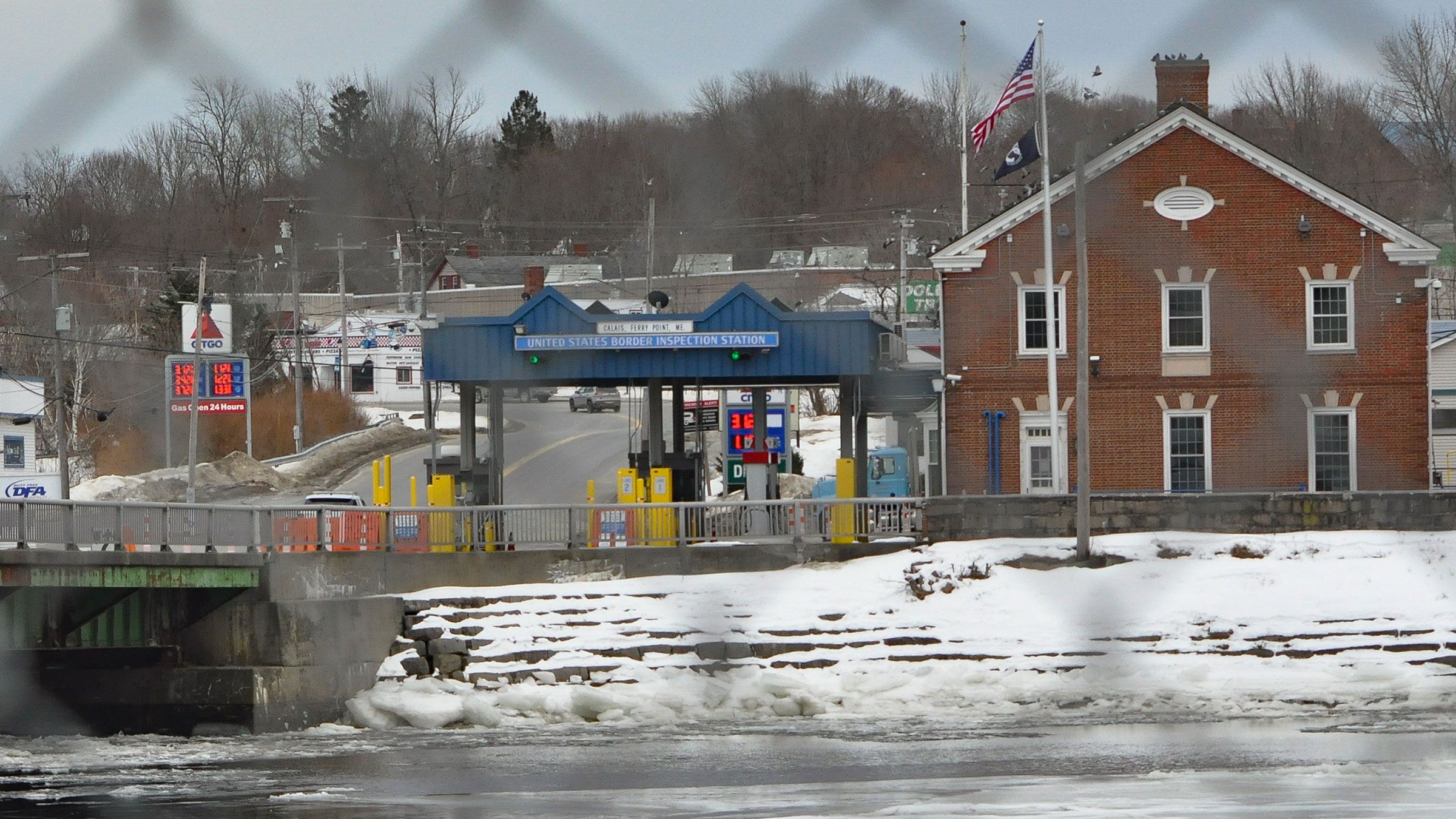
Skip to Content News Archives Economy Energy Oil & Gas Renewables Electric Vehicles Mining Commodities Agriculture Real Estate Mortgages Mortgage Rates Finance Banking Insurance Fintech Cryptocurrency Work Wealth Smart Money Wealth Management Investor Personal Finance Family Finance Retirement Taxes High Net Worth FP Comment Executive Women Puzzmo Newsletters Financial Times Business Essentials More Innovation Information Technology FP500 Podcasts Small Business Lives Told Tails Told Shopping Financial Post Store Obituaries Place a Notice Advertising Advertising With Us Advertising Solutions Postmedia Ad Manager Sponsorship Requests Classifieds Place a Classifieds ad Working Profile Settings My Subscriptions My Offers Newsletters Customer Service FAQ News Economy Energy Mining Real Estate Finance Work Wealth Investor FP Comment Executive Women Puzzmo Newsletters Financial Times Business Essentials News Economy Trump's trade war redraws a border New Brunswick and Maine had learned to ignore The economies of this province and state have become intertwined over the generations, but now tariffs from both sides are testing that relationship Published Oct 02, 2026 • Last updated 1 hour ago • 9 minute read The U.S. Border Inspection Station in Calais, Maine is shown through a chainlink fence on the Canadian side of the international border. Photo by Brice McVicar/Brunswick News James Robbins’ family has been in the lumber business in Maine since 1881, but his company’s modern path north began by accident at a kids’ soccer tournament in New Brunswick.
About three decades ago, he travelled to Saint John to watch his sons play soccer and came away convinced there was a market across the border for his family’s eastern white pine. What followed was decades of expansion. Robbins Lumber Inc. first began selling through a New Brunswick wholesaler, later branching out across Atlantic Canada and eventually establishing a distribution operation in Nova Scotia.
Today, Robbins, 81, remains actively involved as a consultant to the fifth-generation family business, which his children have owned and run since 2013. Subscribe now to read the latest news in your city and across Canada. Exclusive articles from Barbara Shecter, Joe O'Connor, Gabriel Friedman, and others.
Daily content from Financial Times, the world's leading global business publication. Unlimited online access to read articles from Financial Post, National Post and 15 news sites across Canada with one account. National Post ePaper, an electronic replica of the print edition to view on any device, share and comment on.
Daily puzzles, including the New York Times Crossword. Subscribe now to read the latest news in your city and across Canada. Exclusive articles from Barbara Shecter, Joe O'Connor, Gabriel Friedman and others.
Daily content from Financial Times, the world's leading global business publication. Unlimited online access to read articles from Financial Post, National Post and 15 news sites across Canada with one account. National Post ePaper, an electronic replica of the print edition to view on any device, share and comment on.
Daily puzzles, including the New York Times Crossword. Create an account or sign in to continue with your reading experience. Access articles from across Canada with one account.
Share your thoughts and join the conversation in the comments. Enjoy additional articles per month. Get email updates from your favourite authors.
Create an account or sign in to continue with your reading experience. Access articles from across Canada with one account Share your thoughts and join the conversation in the comments Enjoy additional articles per month Get email updates from your favourite authors Sign In or Create an Account or Maine, hell, we're surrounded by Canada Now, though, a 25 per cent Canadian tariff on the company’s lumber, imposed this month in response to new United States tariffs on Canadian goods, is making that cross-border trade significantly harder. SUBSCRIBER EXCLUSIVE: FP West: Energy Insider brings you behind the oilpatch’s closed doors with exclusive insights from insiders every Wednesday morning.
By signing up you consent to receive the above newsletter from Postmedia Network Inc. A welcome email is on its way. If you don't see it, please check your junk folder.
The next issue of FP West: Energy Insider will soon be in your inbox. We encountered an issue signing you up. Please try again The tariff is increasing costs, reducing orders from Canadian customers and forcing Robbins Lumber to absorb some of the added expense itself.
Robbins declined to quantify the drop in orders because he’s no longer involved in day-to-day sales, but he called the impact significant. The real frustration, he said, is that neither side wants the relationship to end. “Maine, hell, we’re surrounded by Canada,” Robbins said.
“We’ve got Quebec on one side, New Brunswick on the other. Why shouldn’t we be doing business with each other?” The economies of Maine and New Brunswick have become so intertwined over generations that the effects of the Canada-U.S. trade war are being magnified along the border, raising costs and disrupting supply chains and longstanding business relationships, with the tariffs imposed by both countries testing a regional economy built around the relatively free movement of goods, resources and investment. New Brunswick accounted for about 20 per cent of Maine’s exports in 2024, or roughly US$620-million worth of goods, according to the Maine International Trade Center.
If the province were an independent country, the trade group said it would be the state’s largest international export market. Maine, meanwhile, imported US$4.7-billion worth of goods from Canada that year, roughly 70 per cent of everything the state imported. Nearly 58,000 customers in northern and eastern Maine rely entirely on New Brunswick Power Corp. for electricity.
Photo by Brunswick News Archives But their ties run deeper than commerce. Nearly 58,000 customers in northern and eastern Maine rely entirely on New Brunswick’s New Brunswick Power Corp. for electricity delivery, according to state regulatory data. The Maritimes & Northeast Pipeline crosses the border, as do freight rail lines and roads.
Stefano Tijerina, a University of Maine senior lecturer in management who studies the history of Canada-U.S. economic relations, considers the Maine-New Brunswick relationship the most deeply integrated along the border, a product of geography and economic ties that predate modern free-trade agreements. The integration of the two regions has already happened. You cannot tear it apart Over time, roads, railways, pipelines and energy grids became the “veins” connecting the regional economy, he said, while industries including forestry, fisheries and agriculture developed supply chains on both sides.
“The integration of the two regions has already happened,” he said. “You cannot tear it apart.” That integration was on display Tuesday when U.S. customs officials stopped a truck carrying mail and supplies from mainland New Brunswick to Campobello Island, N.B., via the island’s only bridge, which is connected to Maine. The truck contained milk, spirits and other goods caught by new U.S. import restrictions even though they were ultimately destined for another part of New Brunswick.
Cars cross over the International Bridge between Lubec, Maine, on the right and Campobello, on the left. The bridge from the United States is the only road access to the Canadian island. Photo by DON EMMERT/AFP via Getty Images Decades of relatively free movement across the border have also left businesses particularly exposed when new trade barriers go up, Tijerina said.
Still, he believes the current disruption is unlikely to permanently sever the relationship. The region has endured periods when the border became more restrictive, he said, but businesses and communities continued trading across it. The depth of those ties is particularly apparent in forestry, one of the economic foundations of both regions.
New Brunswick exported more than $443-million worth of forest products to Maine in 2021, making the state its largest U.S. market for the sector, according to provincial data. A senior Maine forest-products industry representative, who asked not to be identified because of the sensitivity surrounding the trade dispute, said every paper mill in the state produces at least some products caught by Canada’s retaliatory tariffs. Those tariffs range from 15 per cent to 50 per cent depending on the product, with many lumber and paper products facing a 25 per cent levy.
The effects can spread through the broader industry, too, the industry source. Mills provide markets for timber harvested from Maine forests, while sawmills generate chips and other residual material used by pulp and paper producers. “You can’t run sawmills without paper mills,” he said.
For example, at Woodland Pulp LLC in Baileyville, Maine, nearly 30 per cent of the mill’s raw wood fibre has historically come from New Brunswick, said company spokesperson Scott Beal. The company briefly stopped buying New Brunswick hardwood logs and wood chips last fall after a 10 per cent U.S. timber tariff made the imports too expensive. The pulp mill later shut down for nearly a month, although Beal said weak global markets, rather than tariffs, were the main reason behind the decision.
This aerial view shows Woodland Pulp LLC in Baileyville, Maine, located close to the Canadian border. The company briefly stopped buying New Brunswick hardwood logs and wood chips last fall after a 10 per cent U.S. timber tariff made the imports too expensive. Woodland has since resumed buying some New Brunswick fibre, but another part of its operations shows how quickly the trade relationship can turn back on itself.
Woodland-affiliated St. Croix Tissue Inc. supplies large rolls of unfinished tissue paper to Canadian manufacturers, which convert them into products such as toilet paper and paper towels. Those shipments are now subject to a 50 per cent Canadian tariff.
“What it says to me is it’s doing nothing but adding cost to the business,” Beal said. “I don’t know how anyone benefits.” The tariff has yet to force significant staffing or production changes at the operation, he said, since tissue demand is strong enough that production no longer destined for Canada can be sold elsewhere. He also said soaring diesel prices are currently a much bigger problem for the forestry supply chain than tariffs.
“But it’s another one-two punch,” he said. The cross-border dependence, however, extends across the industry. In Edmundston, N.B., and Madawaska, Maine, Twin Rivers Paper Co. operates manufacturing facilities split by the Saint John River, with pulp produced in Edmundston moving across the border to its paper mill in Madawaska.
Twin Rivers declined to comment on the effects of the current trade war. While the cross-border flow continues, Dana Doran, executive director of the Professional Logging Contractors of the Northeast, said U.S. duties and tariffs, now totalling roughly 45 per cent on most Canadian softwood lumber, are influencing where companies invest. New Brunswick’s J.D.
Irving Ltd. has operated in Maine’s forestry sector since 1947 and is now the state’s largest private landowner, with roughly 1.3 million acres of timberland. Photo by Tribune Archives Canadian-owned forest product companies are “ramping up manufacturing in Maine to avoid the duties,” he said, pointing to new investment by New Brunswick’s J.D. Irving Ltd. (JDI).
The Saint John-based company has operated in Maine’s forestry sector since 1947 and is now the state’s largest private landowner, with roughly 1.3 million acres of timberland. Its forest-products operations support more than 2,600 direct, indirect and contractor jobs in the state, according to company figures. Earlier this month, JDI announced a major modernization of its sawmill in Ashland, Maine, that will nearly double its annual production capacity to 250 million board feet from 130 million.
The project is expected to create or retain the equivalent of 220 permanent full-time jobs. The expansion follows JDI’s acquisition of another Maine sawmill in Masardis early last year, which employed about 80 people at the time of the purchase. JDI declined to discuss the broader impact of the trade dispute and has not attributed its expansion to tariffs.
Not everyone in Maine’s forest industry views tariffs and duties as a problem. Jason Brochu, co-president of Pleasant River Lumber Co. and co-chair of the U.S. Lumber Coalition, supports them, saying they counter Canadian timber policies that the U.S. industry considers unfair and have encouraged investment and increased production at U.S. mills.
The duties are part of a decades-old softwood-lumber dispute that predates the latest trade war. But Robbins said they also illustrate the complicated effects of imposing new barriers on an industry that has long operated across the border. He said U.S. duties on Canadian lumber help his family’s business “a little bit” in the domestic market, although the effect is much greater for his fellow Maine spruce producers that compete more directly against Canadian lumber.
But Robbins said he doesn’t believe his company needs the protection. “We really didn’t have a problem competing with the Canadian pine,” he said. “We’re actually friends with them.
We were happy the way it was before any tariffs from either direction.” Of course, the economic ties between New Brunswick and Maine extend far beyond timber. The trade fight is hitting one of New Brunswick’s best-known exporters, Moosehead Breweries Ltd., which sent about 15 per cent of its beer south before the U.S. ban on Canadian alcohol. Photo by Archive For example, lobster harvested in Maine has long moved north for processing in Canada, at times the equivalent of about half the state’s annual catch, before returning south as finished products.
New Brunswick accounts for roughly half of Canada’s lobster-processing volume, and Maine helps supply processors during those times when relatively little lobster is being caught in Canada, said Nat Richard, executive director of the Lobster Processors Association. That integration was nearly disrupted when Canada temporarily imposed retaliatory tariffs on U.S. seafood beginning Aug. 25. The federal government walked back the 25 per cent levy the following day after industry leaders warned of harm on both sides of the border.
Richard called the episode a “case study on steroids” of how easily regional supply chains can be disrupted. “It could have had really catastrophic implications on both sides of the border,” he said. The trade fight is also hitting one of New Brunswick’s best-known exporters, Moosehead Breweries Ltd., which is now enduring a U.S. ban on Canadian alcohol that took effect Tuesday, effectively shutting the brewer out of one of its most important markets.
U.S. sales account for about 15 per cent of Moosehead’s volume, chief executive Andrew Oland said, and Maine is an especially important market for the Saint John-based brewer since it has sold beer there for decades and has longstanding relationships with local distributors. Those close ties matter, he said, because Mainers tend to see Moosehead as coming from just across the border. Moosehead rushed an additional 10 to 15 truckloads of beer across the border last week, ahead of the U.S. ban on Canadian alcohol.
If you don't live in a border state, you just don't understand that the border really doesn't exist The company had previously continued shipping beer south despite a 50 per cent U.S. tariff, losing a small amount on every case since August, Oland said. “Why are we sending beer to the U.S. when we’re losing money on every case?” he said. “The answer is because we’re trying to protect shelf space.” If Moosehead stops supplying stores, Oland said retailers will fill shelves with competing products and winning it back can be difficult.
Oland said the disruption is particularly jarring because businesses in the region have long operated as though the border was barely there. “If you don’t live in a border state, you just don’t understand that the border really doesn’t exist,” he said. The trade fight is making that border increasingly difficult to ignore.
Robbins has never experienced a dispute such as the current one since joining his father’s lumber business after leaving the U.S. Navy in 1968. His business could replace Canadian sales with customers in the eastern U.S. if it had to, he said, but he doesn’t want to.
“We all still want the relationship very badly, but it’s come down to dollars now,” he said. “Our customers want to buy our lumber, but if it’s costing 25 per cent more, it makes it difficult for them to do it.” Feature photo: The U.S. Border Inspection Station in Calais, Maine viewed through a chainlink fence on the Canadian side of the international border.
Photo by Brice McVicar/Brunswick News • Email: arankin@postmedia.com Join the Conversation This website uses cookies to personalize your content (including ads), and allows us to analyze our traffic. Read more about cookies here . By continuing to use our site, you agree to our Terms of Use and Privacy Policy .
Source: Financial Post