Earnings · Economy 51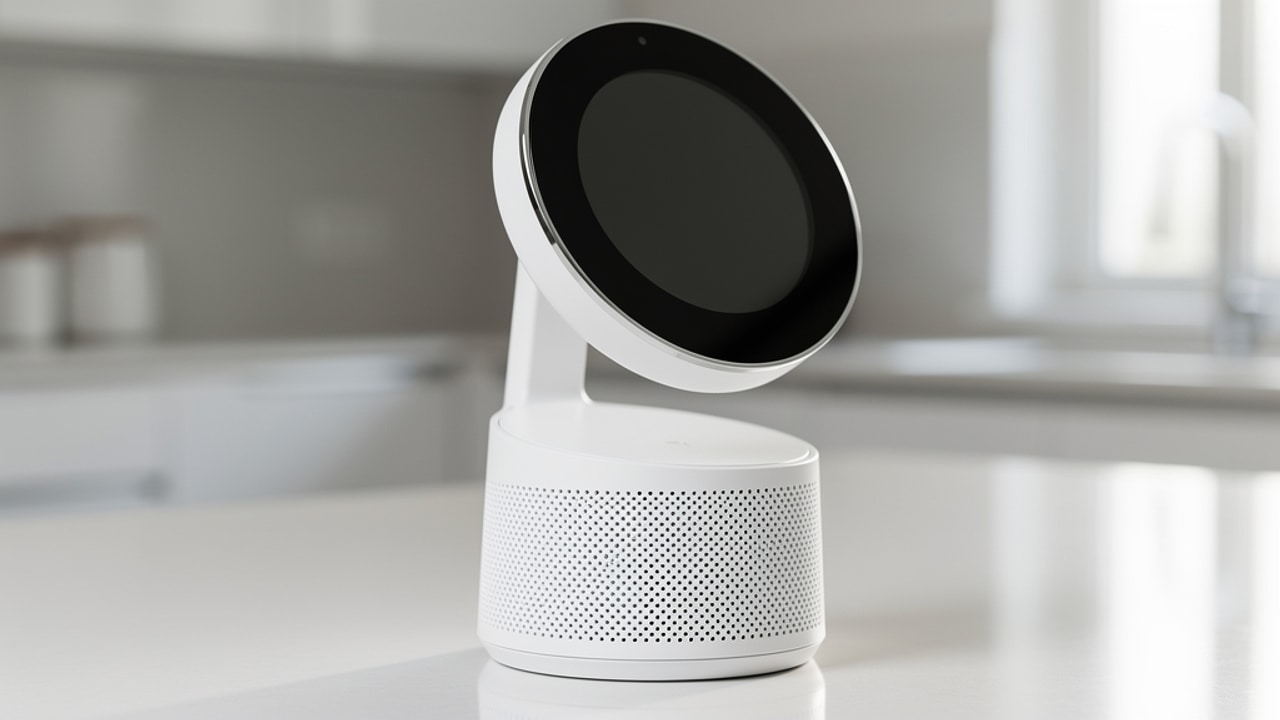
Apple is finally putting hardware behind the Siri overhaul it has spent two years promising. The bet is a screen for your kitchen counter, not a phone. Bloomberg's Mark Gurman reported that Apple will unveil HomePad, its first dedicated smart-home display, on October 13, alongside a refreshed HomePod mini and an updated Apple TV 4K.
It's Apple's first real swing at a new product category since the Vision Pro, and its first home device built around the Siri AI overhaul Apple released in September. According to MacRumors, which cited Gurman's reporting, Apple has not said whether the reveal will be a livestreamed keynote, a shorter prerecorded video, or just a run of Newsroom press releases. That's not a trivial detail.
The format Apple picks says something about how much confidence it has in the product. HomePad reportedly borrows its look from the iMac G4: a round display floating above a speaker base, somewhere between six and seven inches across. Gurman's reporting, as relayed by MacRumors, describes two versions, one with the screen fixed to the speaker for a countertop or nightstand, another built to mount on a wall as a fixed smart-home control panel.
Apple is said to be running it on an A18 chip, with facial and voice recognition that adjusts the display, calendar, widgets, and music to whoever walks up. The operating system reportedly has a new name, homeOS, stitched together from pieces of iOS, watchOS, and tvOS. Strip away the hardware and HomePad is a referendum on Siri.
CNBC reported in March 2025 that Apple had delayed the AI-powered Siri overhaul it promised for iOS 18, and Apple said on September 14, 2026, that Siri AI was rolling out in beta with personal context, onscreen awareness, and broader app actions. HomePad is the first new device designed around that assistant becoming useful in a shared room instead of on a personal screen. If Siri still stumbles on launch day, there's no phone screen to hide behind.
It's the whole product. That's the real risk Apple is taking here, and it's one competitors don't have to worry about in the same way. Amazon's Echo Show and Google's Nest Hub have had years to refine the smart-display format, cheaper hardware, and assistants that, while not flawless, have shipped and iterated in public for years.
Apple is arriving late to the category and asking customers to trust a voice assistant whose biggest AI upgrade only recently started rolling out. The HomePod mini refresh looks like the safer bet of the three announcements. MacRumors reported it will carry Apple's in-house N1 chip for Wi-Fi 7, a second-generation Ultra Wideband chip for better device-to-device handoff, and new color options including pink and green, with no major shape change.
It's the first HomePod mini update since the original launched in 2020. The new Apple TV 4K is expected to move to an A19 or A19 Pro chip and jump to 8GB or 12GB of RAM, mostly to give Apple Intelligence and Siri enough headroom to run locally, alongside an updated Siri Remote. A leaked render suggests the box itself looks unchanged.
None of this is confirmed by Apple yet. The company has made no public statement about an October 13 event, and everything above traces back to Gurman's sourcing at Bloomberg, cited and expanded on by MacRumors and others this week. Apple has a habit of letting these reports run for weeks before confirming or quietly proving them wrong, and the ambiguity over the announcement format only adds to that.
A full keynote would signal Apple sees HomePad as a flagship moment. A quiet Newsroom post would suggest otherwise, and after the long Siri delay, customers searching for an apple homepad release date are going to read that signal closely. Also read: DeepSeek Narrows AI Gap With US to Just 3 Percent, Bloomberg Says • QQQ hits a record near $750 as five AI names keep carrying the index • Micron CEO Warns the Memory Chip Crunch Gets Worse Before It Gets Better This article is posted in Technology News , check it out for more related stories.
Source: Startup Fortune